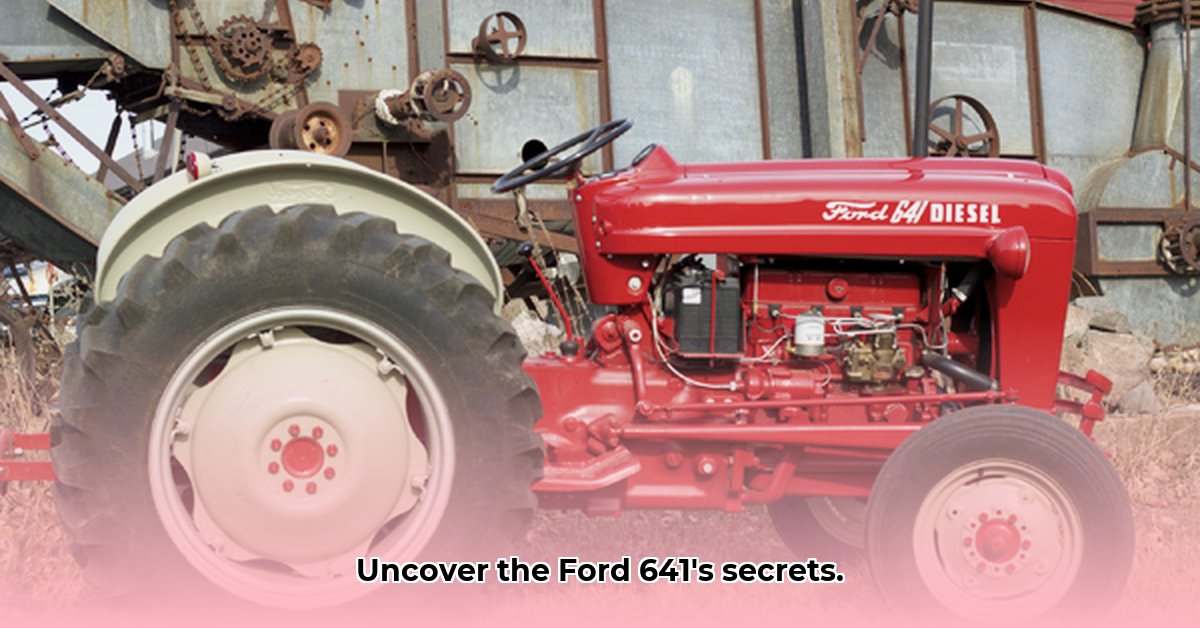
The Ford 641 Workmaster, a stalwart of farms from 1957 to 1962, earned its reputation as a reliable workhorse. This comprehensive guide delves into its specifications, historical context, and restoration, catering to enthusiasts, historians, and potential owners alike. Whether you're troubleshooting a stubborn issue or dreaming of a gleaming restoration project, this guide provides the essential information. For carburetor adjustments, see this helpful guide: carburetor adjustments.
Under the Hood: Engine Options and Power
The Ford 641 offered farmers a choice of powerplants to suit their needs and budget. Options included the Ford EAE Red Tiger gasoline engine, a flexible LP gas variant, and a robust diesel engine. Each engine offered a slightly different horsepower output, ranging roughly from 40 to 50 hp depending on the fuel type. This variability was crucial, as a farmer might need the hefty torque of a diesel for heavy plowing, but opt for the lighter gasoline engine for lighter tasks. What powertrain best suited a farmer's operation significantly impacted their efficiency and workload.
Shifting Gears: Transmission Choices
Further enhancing its versatility, the Ford 641 offered two distinct transmission options. A simpler 4-speed forward, 1-speed reverse transmission suited smaller farms, while a more advanced 12-speed forward, 3-speed reverse gearbox offered superior flexibility for larger operations. This choice directly affected the operator's ability to manage varied terrains and tasks efficiently. Did the added gears justify the increase in complexity? That was a decision left to the discerning farmer.
Lifting Power: Hydraulics and Implement Capacity
The Ford 641's hydraulic system, though basic by modern standards, provided respectable lifting power. Using an open-center design, known for its relative ease of maintenance–a genuine benefit for farmers facing equipment downtime—the system boasted a lift capacity of 1250 lbs (567 kg). This capacity was generally sufficient for various implements common during that era. How did the simplicity of the open-center system affect its longevity and ease of repair compared to closed-center systems that became more prevalent later? Further research is needed to fully explore this.
Key Specifications: A Summary
While precise specifications for vintage tractors can be inconsistent, the following table summarizes what reliable sources reveal:
| Feature | Specification(s) | Notes |
|---|---|---|
| Production Years | 1957-1962 | Production numbers varied year-to-year. |
| Engine Options | Ford EAE Red Tiger Gasoline/LP Gas, Ford Diesel | Horsepower varied based on the engine and fuel type. |
| Transmission Options | 4 Forward/1 Reverse; 12 Forward/3 Reverse | Significantly impacted operational efficiency. |
| Rear Lift Capacity | 1250 lbs (567 kg) | Sufficient for many common agricultural implements of its time. |
| Fuel Tank Capacity | Further research is needed to confirm. | Variation in reported capacities highlights the challenge of sourcing accurate data for vintage machines. |
Restoring Your Ford 641: A Practical Guide
Restoring a Ford 641 is a rewarding but considerable undertaking requiring patience, mechanical aptitude, and planning. The process, while multifaceted, can be broken down into manageable steps:
- Assessment: Begin with a thorough inspection, documenting the tractor's condition with detailed notes and photographs. This forms the foundation of your restoration plan.
- Parts Acquisition: Source necessary parts. While original parts are ideal, locating replacements or suitable equivalents may be necessary. Online forums and specialized parts suppliers are invaluable resources.
- Mechanical Overhaul: Systematically rebuild the engine, transmission, and hydraulics, meticulously documenting each step, to ensure traceability and ease future troubleshooting.
- Cosmetic Restoration: Once the mechanical aspects are completed, focus on restoring the tractor's appearance through repainting, replacing decals, and addressing other cosmetic needs.
- Testing and Adjustments: After reassembly, thoroughly test the restored tractor and make any necessary adjustments to optimize performance and ensure a safe and reliable machine.
A Legacy of Reliability
The Ford 641, a simple yet dependable machine, stands as a testament to robust engineering. Its straightforward design and multiple engine choices made it a versatile asset for farmers during that era. Although it lacks the advanced features of modern tractors, its inherent qualities of dependability and ease of maintenance continue to make it attractive to both enthusiasts and those seeking a reliable workhorse. The Ford 641's enduring appeal speaks to its lasting legacy and the enduring value of time-tested engineering.